

Canada has been in the headlines of late, and from a brand perspective, for all the right reasons. The world’s second biggest country has been the focus for much of the world’s news following a huge swing in its general elections and for standing up to substantial rhetoric from the US President. Never has it been cooler to be a Canadian, eh?
And in other news, they have also been highlighting the problems caused by predatory publishing. In an excellent episode of TVO Today’s ‘Big [If True]’ series, presenter Molly Thomas digs into the topic with two formidable contributors – originator of the term Jeffrey Beall making a rare post-retirement public appearance, and academic author Timothy Caulfield who discusses predatory publishing among other integrity issues in his new book The Certainty Illusion, which we review below.
Beall is back
Since he took down Beall’s Lists in early 2017 and retired from his role as a librarian at the University of Colorado, Beall has maintained a relatively low profile, seemingly enjoying his retirement in the wilds of Colorado and taking some exceptional photographs of the nature that surrounds him. However, he has published a few pieces on the topic of predatory publishing, and despite it being eight years since he walked away, he is undoubtedly the person most associated with the issue.

On the program, Beall confirms he stepped down due to pressure from publishers and his institution and agrees there still lies considerable danger in predatory publishing practices. Though he says little that’s new, he does reiterate that there is a real threat to science from the combination of research that has not been vetted adequately (or at all) and the fact that it is openly accessible. In particular, he says, what is scary is the amount of fake or erroneous information contained in medical research published in predatory journals and presented as fact.
Illusory effect
The persistent threat that Beall lays out dovetails nicely with the other guest, Timothy Caulfield. He is a professor at the University of Alberta, and his latest book The Certainty Illusion, aims to address what Caulfield has described as “a knowledge creation and communication crisis.” The aim of the book is to highlight this crisis by identifying the forces at play, while explaining why it is so difficult even for experts to escape misinformation and fakery. The forces are three-fold, producing illusions in the areas of science, goodness, and opinion to shape what we think. To combat this, Caulfield says it is more complex than simply finding what feel like authoritative sources as they can and have been corrupted. Instead, Caulfield encourages direct action to combat how these forces have been corrupted.
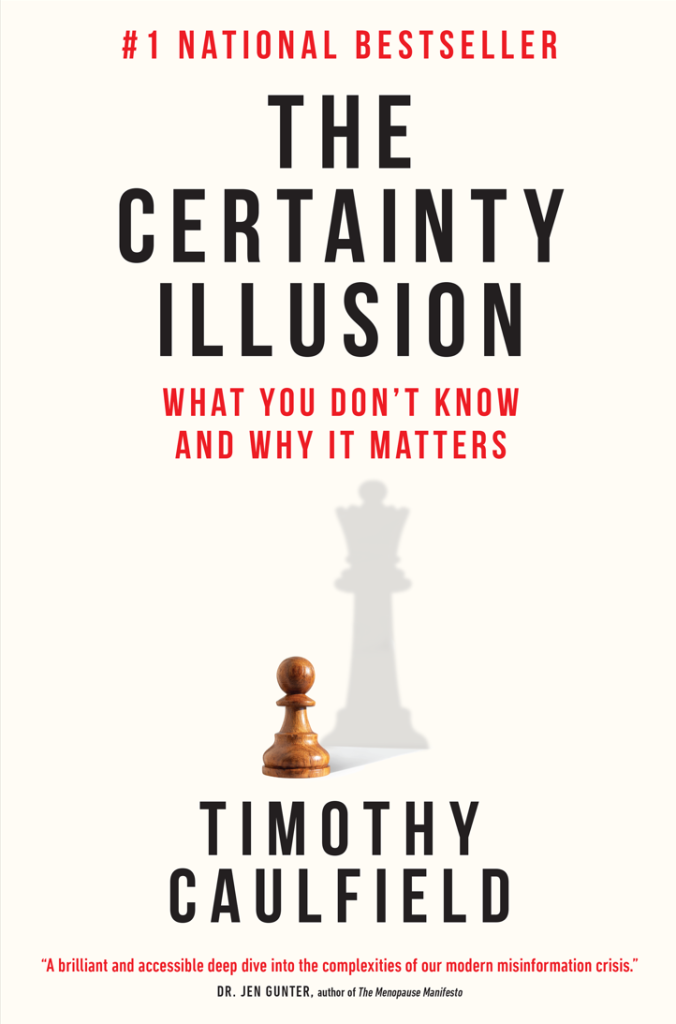
Perhaps ironically, one of the most persuasive parts of the book favors extreme caution when it comes to online reviews, as such a high percentage of them can be fake – please be assured this one is real! However, the point being made is that people’s overall level of trust is undermined not just by the fake reviews themselves, but by the knowledge that there are so many fake reviews. Caulfield’s key message when it comes to issues such as predatory journals is that while we need to be sceptical at all times, we need to hang on to truth for dear life when we see it.
Bookends
Media coverage of predatory journals, such as the TVO Today show, highlights the fact that not only are they way behind the times with an interview with Beall nearly 20 years after he first helped identify the problem, but the issue is also still ‘new’ as Caulfield’s book shows. Contexts such as AI, policy developments, and new entrants into the academic world mean that the problem of predatory journals persists while everything around them changes. Like many publishing integrity issues, such as plagiarism or manipulated images, despite the advances in technology these issues seem to twist away, posing the same problems in different forms. Perhaps the biggest illusion is the belief that we can ever stop these things at all.
