
Incredibly, it has been over five years since we started The Source, our regular offering of insight and intel on the worlds of research integrity and academic publishing. But do the original posts still hold up? We thought it would be interesting to look back at one of our first posts in The Source to see if the key tenets have stayed true when it comes to predatory publishing.
Five years ago, almost to the day, we had just christened our predatory journals database with a new name, Predatory Reports. As part of the partial rebrand, we wanted to share some advice on how to navigate the potential pitfalls of predatory journals in a short and snappy ‘dos and don’ts’ style.
The year 2020 seems a lifetime ago for several reasons – the true impact of the COVID pandemic had revealed itself by this time, with many of our behaviors changed beyond recognition – and since then, there have been many changes in how research is funded, enacted, and published. So, what were we warning people about predatory publishing five years ago? Here are the five things that were top of mind back then:
(original text from 17 Jun 2020):
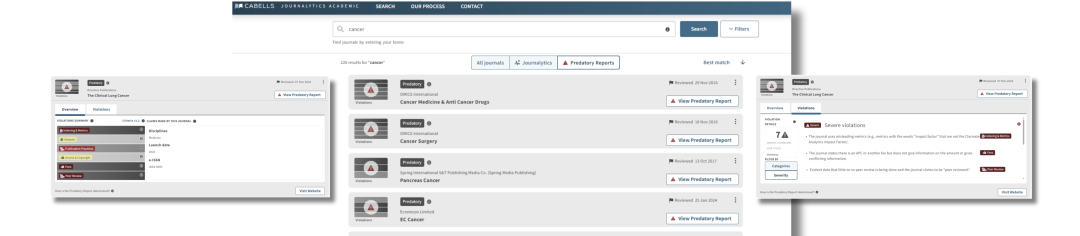
- DO check all violations listed for each journal on Predatory Reports to fully understand what the journal is NOT doing properly, as this can help identify predatory behavior in the future
- DON’T trust a journal because it has an ISSN on its website – over 40% of journals listed on Predatory Reports include one, with many copied from legitimate journals or simply invented
- DO check the publisher’s name in the ‘Advanced Search’ option if a journal is not included in the database, as the same publisher could have created a new journal with the same predatory behaviors
- DON’T visit a predatory journal website unnecessarily, as they could contain malware – hover the cursor over the website to view the full URL to see if it corresponds to that of the journal being checked out
- DO send Cabells updates or information on potential new predatory journals by sending an email to ‘journals@cabells.com’

Rather cheekily, we also added a sixth ‘do’ in the shape of recommending people click the link to our 70+ criteria that we use to identify predatory journals, which are about to be updated (more about that soon!).
Reviewing these warnings, it is clear that they are all still relevant five years on. In 2020, the Predatory Reports database had just over 13,000 journals listed, and now it stands at 19,834. However, some are perhaps more important than others, as the nature of the digital world has changed in the intervening years. The warning about malware is more acute as attacks have become more high-profile, especially in the higher education space, with many universities and libraries being hit (including the British Library in 2023, the effects of which are still being felt today).
Overall, it is clear that the threat from predatory publishers has not been blunted, with the wider impacts of AI yet to be fully understood. If it wasn’t clear in 2020, it should be now that the utmost vigilance is required by all researchers, librarians, and university administrators, and is likely to remain so for the next five years at least.
