
This week’s blog is based on an email Cabells received recently from an academic in Tunisia expressing their concern regarding a conference they had submitted papers to, and guidance on how to withdraw their submissions. This is a common situation that researchers find themselves in, and with the kind permission of Professor Chokri Ben Salah, we are presenting their case so others might gain some support and insight into the problems caused by predatory conferences.
On 3rd February this year, Cabells was copied into an email from Prof Ben Salah, an experienced academic from Tunisia. The email was addressed to the organizing committee of a conference entitled Service-Oriented Computing, which was due to be held in May in Barcelona. The email was a follow-up communication from previous emails, which had requested that the papers Prof Ben Salah had submitted on behalf of himself and other co-authors be withdrawn due to a misunderstanding – the conference they were intended for was the similarly named Service-Oriented Computing (ICSOC). However, to date, no notice confirming the withdrawal has been received.
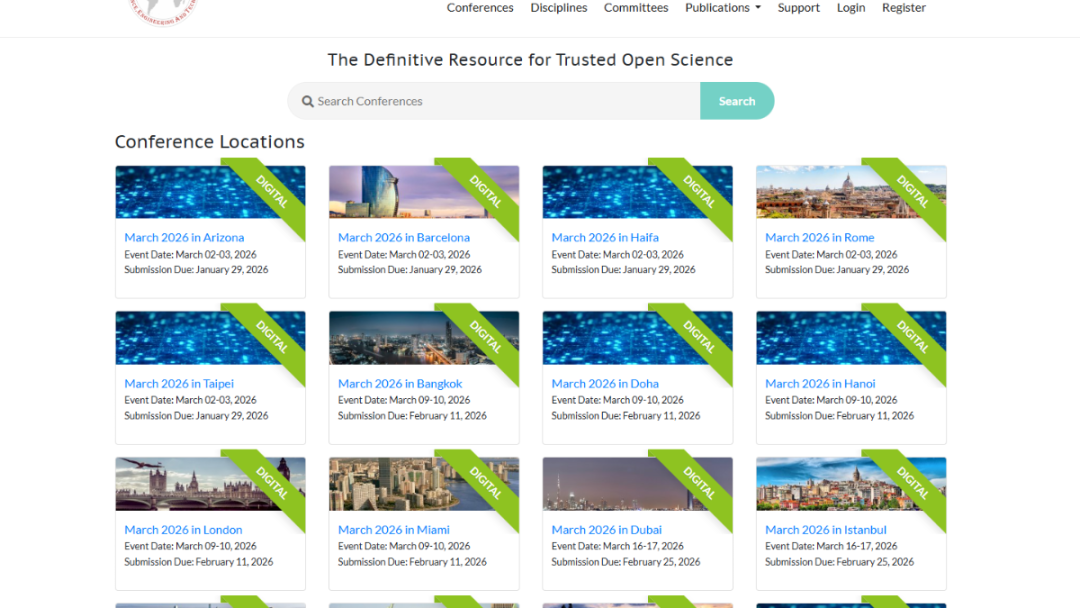
The conference in question was organized by WASET.
Familiar story
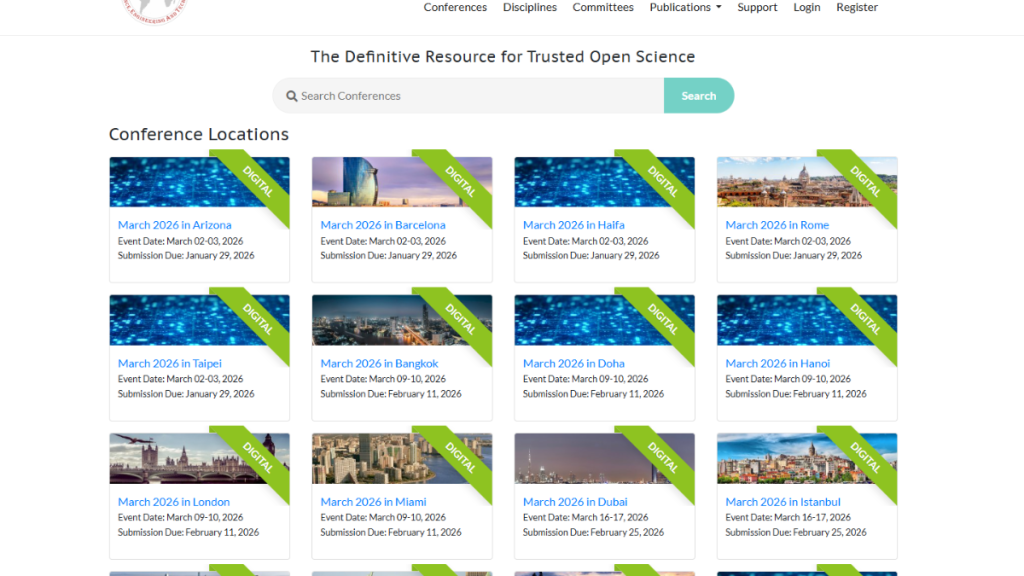
To those who have not heard of WASET, it is perhaps the most well-known of those conferences suspected of predatory behavior, organizing dozens of events each year with little or no apparent academic oversight. A quick look at their website shows just how many events are advertised, and such is their notoriety that they even have a Wikipedia page dedicated to explaining how much money they make by predatory means. In addition, WASET publishes 10 journals that are among the 20,000+ titles listed on Cabells’ Predatory Reports.
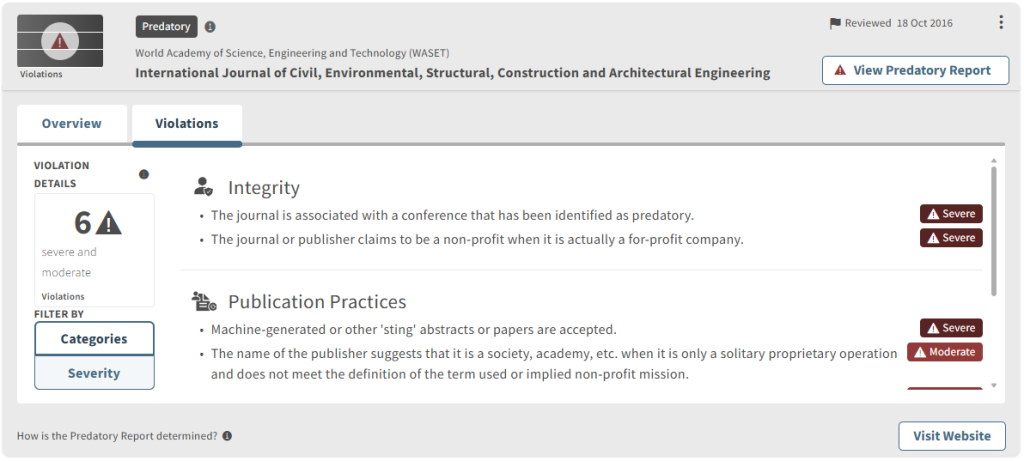
Copying or creating confusingly similar titles is, of course, part of the modus operandi of predatory operators, seeking to deceive well-meaning authors into a trap they can then exploit, either by simply taking APCs fraudulently or, in the worst cases, extorting money from authors by threatening to publish content unless additional fees are paid.
How to act
In his letter to the conference committee, Prof Ben Salah did everything correctly – he explained the situation again, referred to previous correspondence, shared details of the submissions, and made others aware of the situation by copying them in, including Cabells. He also laid out what would happen if no response was forthcoming – everything would be shared with a variety of international organizations, laying out what had happened.
When they finally replied, the conference stated that the withdrawal and refund “were not applicable after registration.” Prof Ben Salah has since continued to request confirmation that the papers will not be published and that copyright agreements will be revoked. As he says, this is the most critical issue from an academic perspective.
We asked Prof Ben Salah about his experiences and why he had submitted papers to this conference. He said: “I selected this conference because it appeared to be associated with the well-known ICSOC conference series, which is recognized and ranked in CORE conference listings. The title and description of the event created the impression that it was part of the established academic ICSOC community.
“I conducted preliminary verification. However, the similarity in naming and thematic scope led to confusion with the legitimate ICSOC conference series. Unfortunately, I did not identify the misleading aspects early enough.”
Next steps
Sadly, this is a common experience for many authors, and once a submission has been made, it is difficult to obtain any satisfactory mitigation. Prof Ben Salah says he had been generally aware of predatory publishing practices, but the closeness in identities of the two conferences meant he had failed to detect the imitation. This was despite the fact that he has long-standing experience in academic research and supervision, having previously submitted and published numerous papers in recognized conferences and indexed journals in related areas.
Prof Ben Salah is to be lauded for highlighting this issue, and for taking the steps he did to at least try to minimize the potential damage that could be done by the predatory conference to him and his co-authors – the latest update we have received is that while there have been follow-up communications, they have not led to any resolution. By getting ahead of things and being open about it, any leverage the conference could use in the future has been eradicated, as everyone can now see an audit trail of events. Even experienced authors can fall into the traps laid for them by WASET and their predatory ilk, and if they cannot be avoided, they can at least be defanged by taking actions like we have seen here.
