

A question Cabells is often asked about the coverage of journals in its database products is, ‘How do you find out about them?’ This is not an easy question to answer, as there are so many reasons for a journal to come to our attention, for good or bad – editor recommendation, new launch, author complaints, user feedback, and customer engagement are just some of the ways we are alerted to a journal so we can pass it on to our team of experts to assess.
Perhaps the best sources of information are publishers. They are at the nexus of publishing activities, in constant contact with authors, peer reviewers, subject experts, other publishers, and editors. They are the kings and queens of everything they survey in the small fiefdom that is an academic journal, so what they say has special relevance – especially when they start their email to you with the words: “Here is a new twist.”
Dotcom trouble
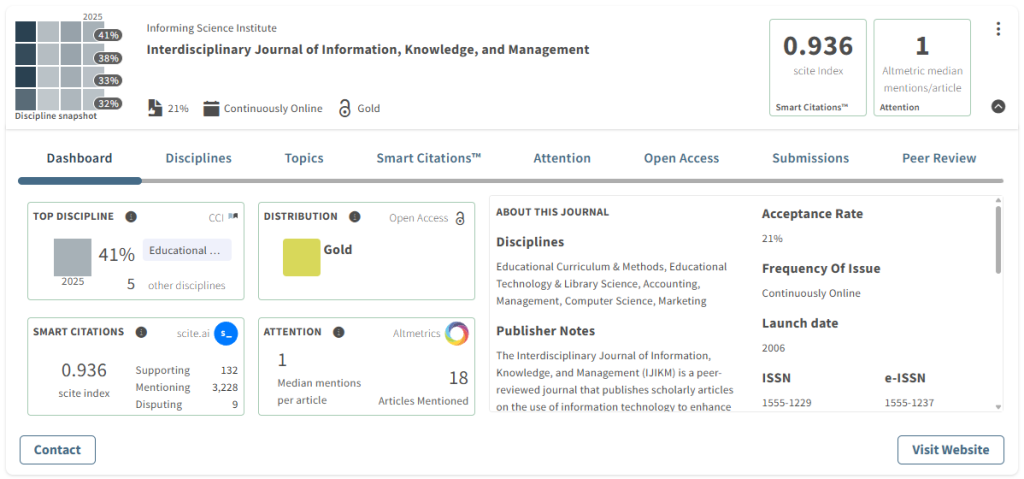
These words were from an email from the Executive Director of the Informing Science Institute (ISI), Dr Eli Cohen. He contacted Cabells regarding two of ISI’s 14 journals – Journal of Information Technology Education: Innovations in Practice (JITEIIP) and the Interdisciplinary Journal of Information, Knowledge and Management (IJIKM). The problem was simple but hugely disruptive – predatory operators had created fake journals to defraud authors who thought they were publishing with the established journals, replacing the .org in the URLs with .com.
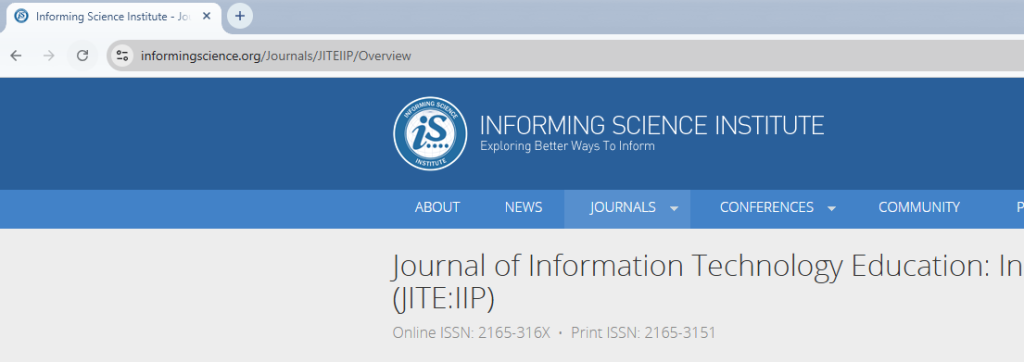
The publisher – which is a well-regarded operator with some of its journals indexed by Cabells on our Journalytics database – said it had managed to get the fake JITEIIP site taken down (albeit through a painful process that took weeks), but the hosting company and site registrar for the fake IJIKM site had refused its request. As such, the fake sites’ mode of operation – copying content from the legitimate journal site, collecting submissions from deceived authors, charging them publishing fees, and faking DOIs – has continued.
Academic pollution
The impact of all this is that authors and funders are defrauded of their research dollars, any citations are lost as they are not recorded by the likes of Cabells or Scopus, and the academic record is further tainted as articles that appear in the fake journal are unlikely to have been peer reviewed. And to add insult to injury, the original journal that operates with integrity to support research is harmed through the actions of these nefarious actors. Dr Cohen told us that the negative impact had mainly been on submissions to the imposter site that were not published, which also led to them having to deal with such authors asking why their papers were not listed on its website as published.
Dr Cohen and ISI seemed to have done everything they could to mitigate the damage of what happened to them, so we asked them what they would advise other publishers who may face a similar issue. Dr Cohen said: “The only advice I have is to register all variations of the domain name, such as .com, .org, .net, and such to prevent imposture sites grabbing them. But even that would not be enough. In one case, the imposter used a variation on the domain name with an added hyphen.”
Journal hijackings are sadly not a new phenomenon, and like predatory journals, seem to be cropping up consistently. Cabells now includes information on hijacked journals on its databases to alert authors. For more information on the issue, we would also recommend following the work of Anna Albakina at Frei University in Berlin, and you can also read one of her posts on hijacked journals here.
