

As many readers know, this week is Peer Review Week, the annual opportunity for those involved in scholarly communication and research to celebrate and learn about all aspects of peer review. As part of this conversation, Simon Linacre reflects on this year’s theme of ‘Trust in Peer Review’ in terms of the important role of … Continue reading How do you know you can trust a journal?
Special report: Assessing journal quality and legitimacy
Earlier this year Cabells engaged CIBER Research (http://ciber-research.eu/) to support its product and marketing development work. Today, in collaboration with CIBER, Simon Linacre looks at the findings and implications for scholarly communications globally. In recent months the UK-based publishing research body CIBER has been working with Cabells to better understand the academic publishing environment both … Continue reading Special report: Assessing journal quality and legitimacy

They’re not doctors, but they play them on TV
Recently, while conducting investigations of suspected predatory journals, our team came across a lively candidate. At first, as is often the case, the journal in question seemed to look the part of a legitimate publication. However, after taking a closer look and reading through one of the journal's articles (“Structural and functional brain differences in … Continue reading They’re not doctors, but they play them on TV
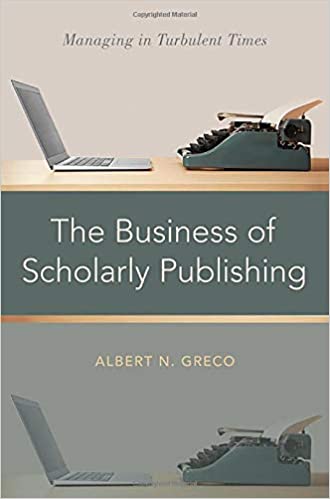
Right path, wrong journey
In his latest post, Simon Linacre reviews the book, The Business of Scholarly Publishing: Managing in Turbulent Times, by Albert N. Greco, Professor of Marketing at Fordham University's Gabelli School of Business, recently published by Oxford University Press. Given the current backdrop for all industries, one might say that scholarly communications is in more turmoil than … Continue reading Right path, wrong journey
The scientific predator has evolved – here’s how you can fight back
Today's post was written by Simon Linacre, Director of International Marketing and Development at Cabells, and Irfan Syed, Senior Writer and Editor at Editage Insights. How do you identify a predatory journal? Easy, look up your spam folder – say seasoned researchers. Actually, this ‘initial indicator’ is often the key to identifying a predatory journal. … Continue reading The scientific predator has evolved – here’s how you can fight back

Gray area
While Cabells spends much of its time assessing journals for inclusion in its Verified or Predatory lists, probably the greater number of titles reside outside the parameters of those two containers. In his latest blog, Simon Linacre opens up a discussion on what might be termed ‘gray journals’ and what their profiles could look like. … Continue reading Gray area
Guest Post: A Symbiosis of Predatory Journals and Authors: Is This Possible?
Editor's Note: Today's post is by Dr. Serhiy Kozmenko, co-founder of the publishing company, Business Perspectives, and Professor of Economics at the University of Customs and Finance in Ukraine. In the Discussion Document "Predatory Publishing", the Committee on Publication Ethics (COPE) specifies that: Predatory publishing generally refers to the systematic for-profit publication of purportedly scholarly … Continue reading Guest Post: A Symbiosis of Predatory Journals and Authors: Is This Possible?

Guest Post – Why Should We Worry about Predatory Journals? Here’s One Reason
Editor's Note: This post is by Rick Anderson, Associate Dean for Collections & Scholarly Communication in the J. Willard Marriott Library at the University of Utah. He has worked previously as a bibliographer for YBP, Inc., as Head Acquisitions Librarian for the University of North Carolina, Greensboro and as Director of Resource Acquisition at the … Continue reading Guest Post – Why Should We Worry about Predatory Journals? Here’s One Reason

Growth of predatory publishing shows no sign of slowing
This week the Cabells Journal Blacklist has hit 13,000 titles, and while the number itself is not that significant, its continued rate of growth shows that the problem of predatory publishing shows no sign of abating. In his latest post, Simon Linacre shares a case study of what a predatory journal looks like and why … Continue reading Growth of predatory publishing shows no sign of slowing

Look before you leap!
A recent paper published in Nature has provided a tool for researchers to use to check the publication integrity of a given article. Simon Linacre looks at this welcome support for researchers, and how it raises questions about the research/publication divide. Earlier this month, Nature published a well-received comment piece by an international group of authors entitled ‘Check for publication integrity … Continue reading Look before you leap!