

Cabells, a provider of key intelligence on academic journals for research professionals, and scite, a platform for discovering and evaluating scientific articles, have partnered to bring scite’s Smart Citations to Cabells Journalytics publication summaries.

The impact of blockchain tech on academic publishing
As blockchain technology continues to branch out well beyond the cryptocurrency world that initially brought it into being, it’s becoming clear it has many potential applications in education. In all likelihood we’re still in the early stages of the technology’s emergence in this field, and the applications will only continue to expand. Even now though, there are some interesting examples.

The fake factor
On the day that the US says goodbye to its controversial President, we cannot bid farewell to one of his lasting achievements, which is to highlight issues of fake news and misinformation. Simon Linacre looks at how putting the issue in the spotlight could at least increase people’s awareness… and asks for readers’ help to do so.
Back to basics
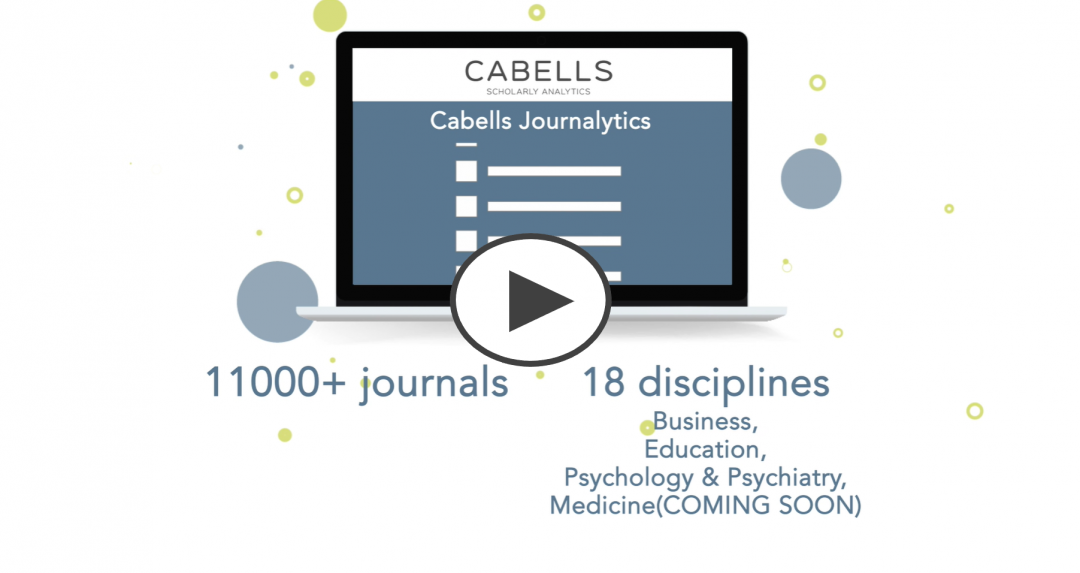
As we enter what is an uncertain 2021 for many both personally and professionally, it is worth perhaps taking the opportunity to reset and refocus on what matters most to us. In his latest blog post, Simon Linacre reflects on Cabells’ new video and how it endeavours to show what makes us tick.

What to know about ISSNs
There are many ways to skin a cat, and many ways to infer a journal could be predatory. In his latest blog post, Simon Linacre looks at the role the International Standard Serial Number, or ISSN, can play in the production of predatory journals.

Cabells and Inera present free webinar: Flagging Predatory Journals to Fight “Citation Contamination”
Cabells and Inera are excited to co-sponsor the free on-demand webinar "Flagging Predatory Journals to Fight 'Citation Contamination'" now available to stream via SSP OnDemand. Originally designed as a sponsored session for the 2020 SSP Annual Meeting, this webinar is presented by Kathleen Berryman of Cabells and Liz Blake of Inera, with assistance from Bruce … Continue reading Cabells and Inera present free webinar: Flagging Predatory Journals to Fight “Citation Contamination”

The A-Z’s of predatory publishing
Earlier this year Cabells published an A-Z list of issues regarding predatory publishing practices, with one tweet a week going through the entire alphabet. In this week’s blog, Simon Linacre republishes all 26 tweets in one place as a kind of primer on how to successfully deal with the phenomenon.

Open with purpose
This week is Open Access Week, which you will not have missed due to the slew of Twitter activity, press releases and thought pieces being published – unless you are an author, perhaps. In this week’s blog, Simon Linacre focuses on academic researchers who can often be overlooked by the OA conversation, despite the fact they should be the focus of the discussion.

Empowering India’s Academia
According to some research, India has the unfortunate distinction of having both the highest number of predatory journals based there, and the highest number of authors publishing in them. In this week’s blog, Simon Linacre answers some of the questions researchers in that country have regarding authentic publishing practices. During the latter part of 2020, … Continue reading Empowering India’s Academia

The RAS Commission for Counteracting the Falsification of Scientific Research
Predatory publishing is undoubtedly a global phenomenon, but with unique characteristics in different countries. In this week’s blog, Simon Linacre shares insight from Russia and a group of researchers keen to shine the spotlight on breaches in publication ethics from within their own country.