
The news from business school leaders meeting in Seattle this week was simple: AACSB + ICAM = AI.
To translate, it was the Association to Advance Collegiate Schools of Business (AACSB) annual get-together, known as the International Conference and Meetings (ICAM), and the focus was very much on Artificial Intelligence. And by focus, while the 1,200+ deans and senior faculty who met there are very much locked in on the topic, they are by equal measure excited and scared witless about what might happen in the five years or so.
Innovation and irrelevance
The reason for this is the sheer unknowable nature of how AI will impact business school education in the near future. In a session on ‘Creative Disruption and the Future of Business Schools’, AACSB President Lily Bi asked a panel of senior business school leaders from different countries around the world what kept them awake at night and how they were innovating. AI was the inevitable answer to both of these questions. Concerns included job prospects for current and future cohorts of MBA students and how AI could be managed in the classroom and in research labs.
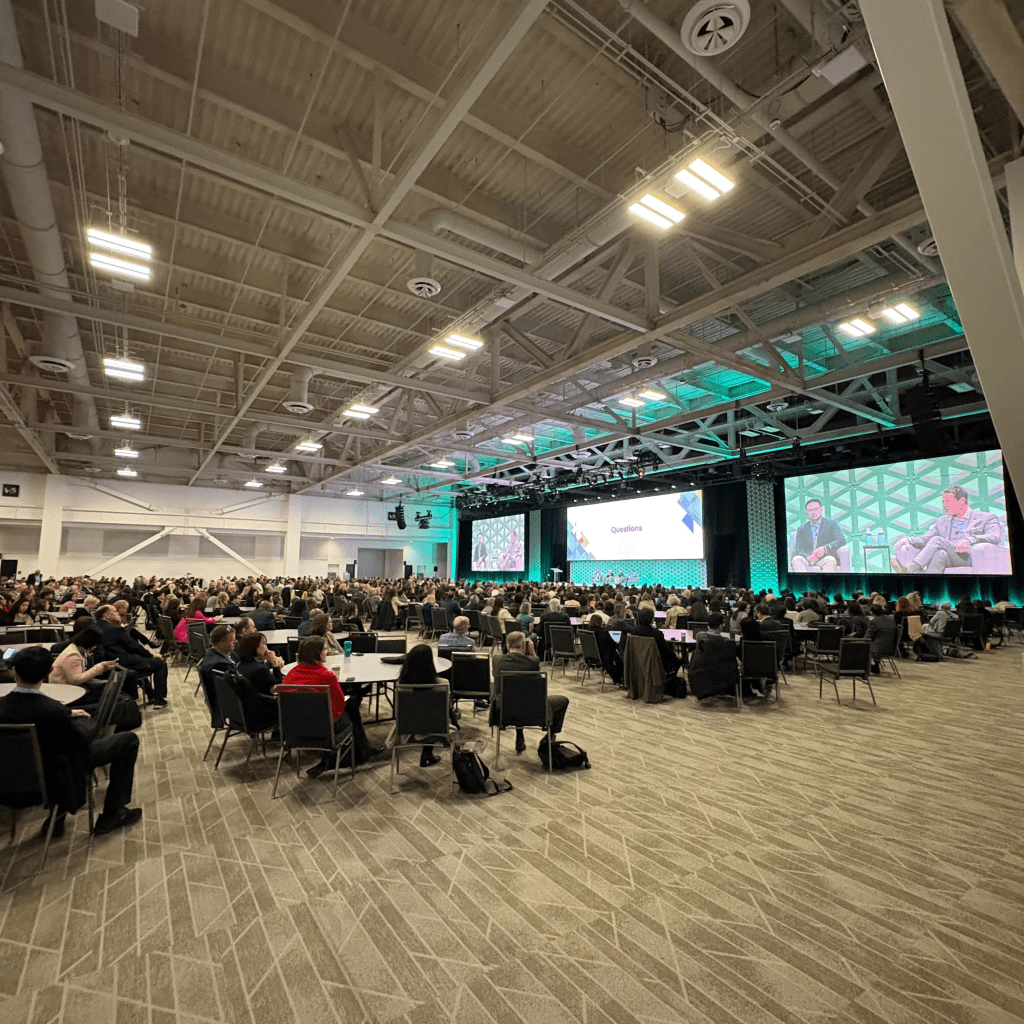
For Lee Newman, the Dean of IE Business School in Madrid, his major worry was how AI was changing the shape of company workforces from the ‘pyramid to diamond’ – in other words, fewer hires and outsourcing intern-level work in major companies was leaving the bottom rungs of the ladder empty, meaning a lack of middle-management options in the future. On the flip side, however, IE was innovating using AI, and is currently creating an entire course using AI, including delivery.
Tough talk???
Newman talked of the impact on teaching and learning from AI as a ‘tsunami,’ and strategically, he wanted his school to be ahead of the curve should this happen. Eddy Fang, who is Dean of International Business School Suzhou and Xi’an Jiaotong-Liverpool University, was of a similar mind. At his school, they had embarked on a top-to-bottom reform of how they approached education, using AI and other new environmental factors to recreate ‘from scratch’ business education. This included fully integrating AI into instruction alongside face-to-face delivery.

In contrast, Prof Michael Cusumano from MIT Sloan School of Management was quite circumspect about AI, pointing instead to the impact other factors, such as geopolitics, were having on elite institutions in the US, as well as the storied history MIT had of innovation, which had positioned it well to ride out any upcoming bumps in the road. To further mitigate how AI may disrupt business education, Newman suggested business schools can teach students how to orchestrate work and develop something he calls ‘context intelligence.’ It is clear from this, other sessions, and conversations in the halls of the conference that business schools are wholly obsessed with how AI can and will change things. Business education has been accused of complacency for decades despite protestations to the contrary, but it is clear things are changing. From BS to AI, if you will.
